
Read the transcript
Shipping from China to Australia.
Transit times, costs and border steps for Brisbane importers.
A guide from Brisbane Freight Forwarding Specialists.
This guide is for businesses bringing commercial goods from a Chinese supplier into Brisbane.
Parcels and online orders sent by courier follow a different path.
Shipping from China to Australia by sea takes about two to four weeks port to port, from most of the main Chinese ports to the Port of Brisbane.
Air freight is usually quoted at about two to four days door to door.
What you pay depends on volume, the trade term on your supplier's quote, the season and the border charges.
Once a consignment is worth more than AUD 1,000, it needs a full import declaration, and payment of duty and GST before release, plus a ChAFTA certificate of origin if you want the lower duty rate.
Biosecurity checks apply to every consignment, whatever its value.
Transit depends on the loading port, the rotation, and whether your goods have their own container.
Sailings from the main Chinese ports are listed by one major port operator at 14 to 22 days to Sydney, Melbourne and Brisbane.
On at least one current service, ships call at Sydney and Melbourne first, and reach Brisbane about 23 days after leaving Yantian, and about 27 days after leaving Ningbo, while from a northern port such as Qingdao, the same service takes closer to 5 weeks.
So plan on two to four weeks on the water from most main ports, allow longer from the north, and ask which call Brisbane is on the service you are booked on.
A shared container, known as LCL, adds a few days at each end, for packing at a depot in China and unpacking at a depot in Brisbane.
Door to door adds the trip to the port in China, and clearance and delivery here.
Tell us the date you need the goods, and we can plan the booking around it.
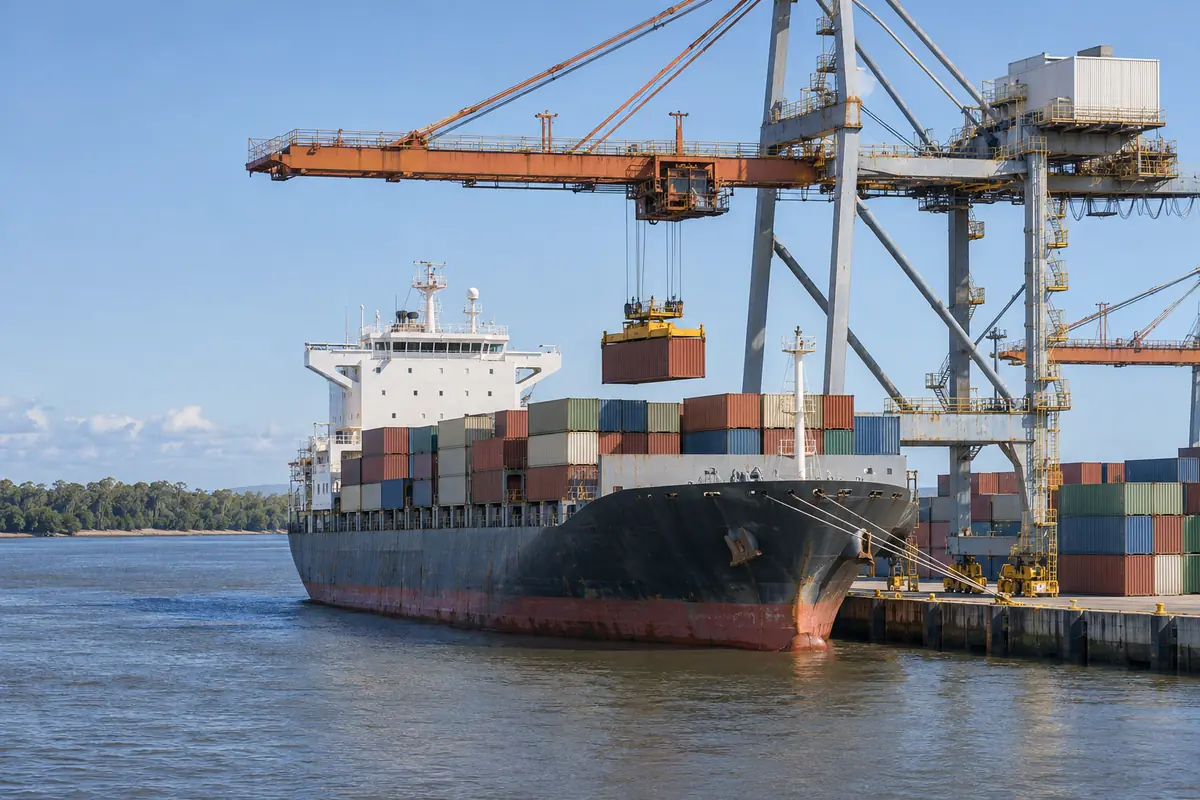
Container ships arrive at the Port of Brisbane, Queensland's largest multi-cargo port, at the mouth of the Brisbane River.
In the 2025-26 financial year, it handled a record 1.74 million TEU, or twenty-foot equivalent units, according to the port's September 2026 release.
Freight rates from China move week to week, so a rate card dates quickly.
These are what set your price.
First, the trade term on your supplier's quote.
The Incoterms rules are 11 three-letter trade terms that decide who books and pays each leg.
On EXW, you pay everything from the factory door.
On FOB, the supplier delivers to the ship at the Chinese port.
On CIF, the supplier pays the sea freight and insurance to Australia, but not the charges here.
Second, volume and weight.
LCL is usually charged by the cubic metre or by weight, whichever gives the higher figure.
A full container is charged per box.
Then there is where the goods start, since a factory near a main port costs less to reach than one far inland.
Air freight costs far more per kilogram than sea freight.
Rates usually rise in the weeks before Chinese New Year.
In Brisbane there are terminal or depot charges, unpacking for LCL, and the truck to your door.
And at the border, there is duty, GST, and two government charges.
The government charges on a full import declaration, listed on the Border Force page when we checked on 13 November 2026, are an import processing charge, for a declaration lodged electronically, of AUD 50 for a consignment over AUD 1,000 and under AUD 10,000, or AUD 152 at AUD 10,000 and over, and a biosecurity charge of AUD 48 for air, or AUD 71 for sea.
To work out the duty and GST on your goods, use the customs duty and GST calculator on our website.
Here is a worked example, using a hypothetical first order.
The goods, the value and the duty rate are assumptions for the sum, not a quote or a ruling.
Say it is 40 cartons of plastic homewares from a supplier near Ningbo, about 6 cubic metres shipped as LCL on FOB terms, with a customs value of AUD 8,000 and a duty rate of 5%.
The duty is AUD 400.
GST is 10% of AUD 8,400, the customs value plus the duty, which is AUD 840, plus 10% of the sea freight and insurance.
The import processing charge is AUD 50, and the biosecurity charge for sea cargo is AUD 71.
That is AUD 1,361 at the border, plus the GST on the freight and insurance, before the freight itself and the Brisbane charges.
If the goods qualify for a nil rate under ChAFTA, and the certificate of origin is held at entry, the duty drops away, and the border costs fall to AUD 921, plus that GST.
Plastics are also among the China goods that can be picked for a stink bug inspection between September and April, so allow a few extra days in that season.
For a free freight quote, tell us what you are bringing in, where it starts and when it will be ready, and we will quote the freight, clearance and delivery in one go.
Call (07) 3555 8959, or use the quote form on our website.
LCL, or less than container load, means your cartons or pallets share a container with other importers' goods.
You pay for the space you use, which suits a few pallets or a first order.
Packing and unpacking at a depot add a few days at each end, so it pays to allow for those days when you plan the order.
FCL, or full container load, means the container is yours.
It is packed at the factory, sealed, and delivered to you or unpacked at a depot.
Once your volume is large enough, a full container is often simpler and costs less per cubic metre than LCL, so we can quote both and show you where the line falls for your goods.
A twenty-foot container is about 5.9 metres long inside and holds about 33 cubic metres.
A forty-foot container is about twelve metres long and holds about 66 to 68 cubic metres.
A forty-foot high cube is about 2.7 metres high inside and holds about 76 cubic metres, which suits light, bulky goods such as furniture.
Figures vary from box to box, and heavy goods can hit the weight limit before the space runs out.
Step one:
the import declaration.
When a consignment's combined value is over AUD 1,000, the Australian Border Force requires a full import declaration.
It states the goods, the importer, how they are transported, their tariff classification and their customs value, and all duties, taxes and charges must be paid before the goods are released.
The importer is responsible for it, and the Border Force encourages first-time or occasional importers to use a licensed customs broker.
Our customs brokers can lodge it for you.
Air and sea cargo worth AUD 1,000 or less still needs a simpler self-assessed clearance declaration.
Step two:
duty and GST.
The duty rate depends on how the goods are classified in the tariff, and the customs value is converted to Australian dollars at the Border Force exchange rate.
GST is 10% of the value of the taxable importation, which is the customs value, plus the duty, plus the transport and insurance to Australia.
Importers registered for GST and approved for the deferred GST scheme can pay the import GST on their activity statement instead.
Step three:
the origin paperwork for the China free trade agreement, known as ChAFTA.
The agreement has been in force since 20 December 2015, and goods that meet its rules of origin can enter duty-free or at a reduced rate.
The paperwork is how you claim that rate:
a ChAFTA certificate of origin issued by an authorised body in China, or a declaration of origin where an advance ruling covers the goods, held when the goods are entered.
Ask your supplier for it when you place the order.
If you pay full duty because the certificate came late, a refund can be claimed once you hold a valid one.
Consignments of AUD 1,000 or less do not need the document, unless orders are split to avoid the rule.
Step four:
biosecurity.
Check your goods in BICON, the Department of Agriculture's import conditions system, which shows whether they are allowed, and whether they need documents, treatment or a permit.
A standard permit usually takes up to twenty business days after the department receives payment and a complete application.
Pallets, crates and dunnage made of solid timber or bamboo must be treated to ISPM 15, or to BICON's conditions, and declared on the packing declaration, which every full and shared sea container needs.
Untreated packaging is treated on arrival, exported or destroyed, at the importer's cost, so ask your supplier for ISPM 15 marked pallets before the goods are packed.
Clean plywood and processed wood packaging are not restricted.
From 1 September to 30 April, the brown marmorated stink bug season applies.
China is an emerging risk country this season, so goods shipped from China, including plastics, furniture and toys, can be picked for a random inspection on arrival.
Step five:
asbestos.
Australia bans asbestos imports, and the importer is responsible for making sure goods contain none.
The Border Force warns that an asbestos free label, or an overseas test certificate, may not meet Australia's standard.
If it suspects asbestos, the Border Force detains the goods, and testing and storage are at the importer's cost.
For building materials and other goods at risk, the Border Force suggests supplier contracts that specify nil asbestos, and accredited testing before shipping.
Step six:
release and delivery.
Once the declaration is accepted, the money is paid and any biosecurity direction is complete, the goods are released.
A container is trucked from the port to you, or shared container freight is unpacked at a depot and delivered.
China's State Council has set the 2027 Spring Festival public holiday for 5 to 13 February 2027, in a notice issued on 5 November 2026.
Factories usually slow down a few weeks before that, and take weeks to return to full output, and freight space tightens before the break.
If you need the goods in Brisbane by March, confirm the ready date with your supplier now, and tell us so we can look for space before the rush.
Have these ready, and we can price the shipment without going back and forth.
The supplier's name, and the pickup city or port in China.
What the goods are, and the HS code if you know it.
The number of cartons or pallets, with weights and dimensions.
The trade term on the supplier's quote, such as EXW, FOB or CIF.
The date the goods will be ready.
The delivery address in Brisbane or South East Queensland.
And whether you need customs clearance only, or freight and clearance together.
How long does shipping from China to Australia take?
Sea freight usually takes about two to four weeks port to port from most main Chinese ports to Brisbane, plus time at each end for pickup, clearance and delivery.
Air freight from China to Australia is usually quoted at about two to four days door to door.
Ask whether your Brisbane freight flies direct or connects.
Should I ship LCL or FCL?
LCL suits a few pallets or a first order.
Once you can fill much of a container, FCL is often simpler and costs less per cubic metre.
We can quote both.
Is it cheaper to use a freight forwarder?
It can be, especially for a small or first shipment.
A forwarder books the space and puts LCL cargo in a shared container, so on a small load you pay for your share of a container rather than a whole one, and one quote can cover the freight, the import declaration and the biosecurity paperwork, which avoids the delays that paperwork mistakes cause.
The Border Force encourages first-time importers to use a licensed customs broker.
For a larger order, we can quote freight and clearance together or separately, so you can compare.
Does the China free trade agreement still apply?
Yes.
ChAFTA has been in force since 20 December 2015, and is still listed as in force by the Department of Foreign Affairs and Trade.
To get the nil or lower rate, have a ChAFTA certificate of origin, or a declaration of origin under an advance ruling, when the goods are entered.
If it arrives later, you can claim a refund of the extra duty.
Do goods worth AUD 1,000 or less need clearance?
Air and sea cargo valued at AUD 1,000 or less still needs a self-assessed clearance declaration, but for most such goods there is no duty, GST or charge to pay.
Alcohol and tobacco are taxed whatever their value.
This guide is general information, not legal or customs advice.
Rules and charges change, so we check them against your shipment when we quote.
Send us the supplier's quote and the packing details.
We will arrange the freight, the paperwork and the clearance, then deliver to your door.
For a free freight quote, call (07) 3555 8959, or send your shipment details through the quote form.

This guide is for businesses bringing commercial goods from a Chinese supplier into Brisbane; parcels and online orders sent by courier follow a different path.
Shipping from China to Australia by sea takes about 2 to 4 weeks port to port from most of the main Chinese ports to the Port of Brisbane. Air freight is usually quoted at about 2 to 4 days door to door. What you pay depends on volume, the trade term on your supplier's quote, the season and the border charges. Once a consignment is worth more than AUD 1,000, it needs a full import declaration and payment of duty and GST before release, plus a ChAFTA certificate of origin if you want the lower duty rate. Biosecurity checks apply to every consignment, whatever its value.
Key takeaways
- Sailings from most main Chinese ports take about 2 to 4 weeks to Brisbane, depending on the port and the service. On some services, Brisbane is a later call, after Sydney and Melbourne.
- LCL (a shared container) suits smaller loads; a full 20 ft or 40 ft container suits larger ones. Air freight is for urgent or high-value cargo.
- Over AUD 1,000, the goods need an import declaration, and duty, GST and charges are generally paid before release.
- A ChAFTA certificate of origin can bring a nil or lower duty rate. Have it when the goods are entered; otherwise you pay full duty and can claim a refund later.
- Timber packaging must be ISPM 15 treated and declared, goods must be asbestos free, and China cargo shipped from September to April can be picked for a random stink bug inspection.
How long shipping from China to Australia takes
Transit depends on the loading port, the rotation and whether your goods have their own container. Sailings from the main Chinese ports are listed by one major port operator at 14 to 22 days to Sydney, Melbourne and Brisbane. On at least one current service, ships call at Sydney and Melbourne first and reach Brisbane about 23 days after leaving Yantian and about 27 days after leaving Ningbo, while from a northern port such as Qingdao the same service takes closer to 5 weeks. So plan on 2 to 4 weeks on the water from most main ports, allow longer from the north, and ask which call Brisbane is on the service you are booked on.
| Mode | Typical time | What adds time |
|---|---|---|
| Sea, FCL (your own container) | About 2 to 4 weeks port to port | Pickup and export clearance in China; Brisbane being a later call; clearance and delivery here |
| Sea, LCL (shared container) | As for FCL, plus a few days at each end | Packing at a depot in China and unpacking at a Brisbane depot |
| Air freight | Usually quoted at about 2 to 4 days door to door, China to Australia | A connecting flight, peak periods and any border hold |
Door to door adds the trip to the port in China and clearance and delivery here. Tell us the date you need the goods and we can plan the booking around it.
Container ships arrive at the Port of Brisbane, Queensland's largest multi-cargo port, at the mouth of the Brisbane River. In the 2025-26 financial year it handled a record 1.74 million TEU (twenty-foot equivalent units), according to the port's September 2026 release.
What decides the cost
Freight rates from China move week to week, so a rate card dates quickly. These are what set your price:
- The trade term on your supplier's quote. The Incoterms rules are eleven three-letter trade terms that decide who books and pays each leg. On EXW you pay everything from the factory door; on FOB the supplier delivers to the ship at the Chinese port; on CIF the supplier pays the sea freight and insurance to Australia, but not the charges here. Our guide to shipping under CIF explains why a cheap CIF price can still cost more at the Brisbane end.
- Volume and weight. LCL is usually charged by the cubic metre or by weight, whichever gives the higher figure. A full container is charged per box.
- Where the goods start. A factory near a main port costs less to reach than one far inland.
- Mode and urgency. Air freight costs far more per kilogram than sea freight.
- The season. Rates usually rise in the weeks before Chinese New Year as factories rush orders out.
- Charges in Brisbane. Terminal or depot charges, LCL unpacking and the truck to your door.
- Border costs. Duty, GST and two government charges on a full import declaration, listed on the ABF import processing charges page (checked 13 November 2026): an import processing charge, for a declaration lodged electronically, of AUD 50 (over AUD 1,000 and under AUD 10,000) or AUD 152 (AUD 10,000 and over), and a biosecurity charge of AUD 48 for air or AUD 71 for sea. To work out the duty and GST on your goods, use our customs duty and GST calculator.
A worked example: border costs on a first LCL order
Here is how the border costs add up on a hypothetical first order. The goods, the value and the duty rate are assumptions for the sum, not a quote or a ruling: 40 cartons of plastic homewares from a supplier near Ningbo, about 6 m³ shipped LCL on FOB terms, with a customs value of AUD 8,000 and a duty rate of 5%.
- Duty. 5% of AUD 8,000 is AUD 400.
- GST. 10% of AUD 8,400 (the customs value plus the duty) is AUD 840, plus 10% of the sea freight and insurance to Australia.
- Import processing charge. AUD 50, for a declaration lodged electronically.
- Biosecurity charge. AUD 71 for sea cargo.
That is AUD 1,361 at the border, plus the GST on the freight and insurance, before the freight itself and the Brisbane charges. If the goods qualify for a nil rate under ChAFTA and the certificate of origin is held at entry, the duty drops away and the border costs fall to AUD 921, plus that GST. Plastics are also among the China goods that can be picked for a stink bug inspection between September and April, so allow a few extra days in that season. Our customs duty and GST calculator runs the same sum on your own figures, and we check the figures against your shipment when we quote.
Bringing in goods from China?
Tell us what you are bringing in, where it starts and when it will be ready, and we will quote the freight, clearance and delivery in one go.
Or call (07) 3555 8959
LCL or FCL: which suits your shipment
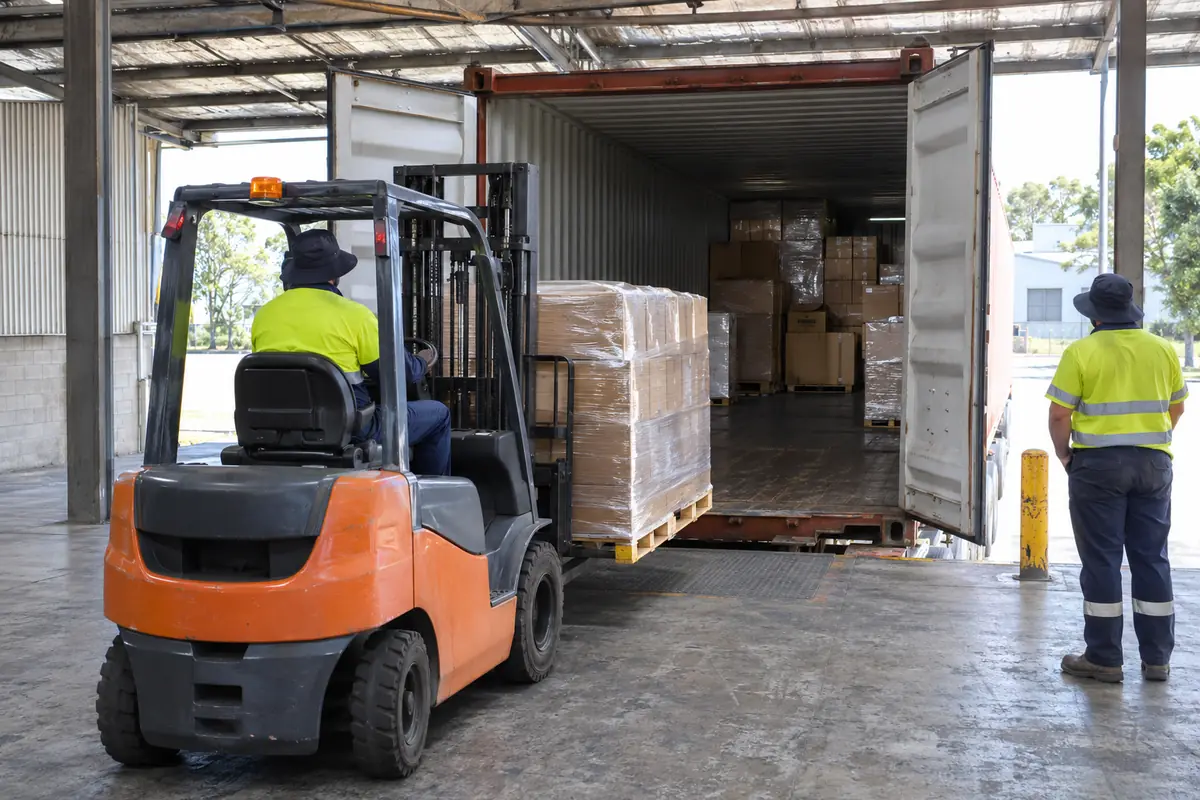
LCL (less than container load) means your cartons or pallets share a container with other importers' goods. You pay for the space you use, which suits a few pallets or a first order. Packing and unpacking at a depot add a few days at each end, so it pays to allow for those days when you plan the order.
FCL (full container load) means the container is yours. It is packed at the factory, sealed and delivered to you or unpacked at a depot. Once your volume is large enough, a full container is often simpler and costs less per cubic metre than LCL, so we can quote both and show you where the line falls for your goods. Our sea freight page covers both services, and for urgent cargo see air freight into Brisbane.
| Option | Inside length | Typical volume | Suits |
|---|---|---|---|
| LCL, shared container | n/a | Charged by the cubic metre | A few pallets or cartons, first orders |
| 20 ft container | About 5.9 m | About 33 m³ | Heavy goods, medium orders |
| 40 ft container | About 12 m | About 66 to 68 m³ | Larger orders, bulky goods |
| 40 ft high cube | About 12 m, about 2.7 m high | About 76 m³ | Light, bulky goods such as furniture |
Figures vary from box to box, and heavy goods can hit the weight limit before the space runs out.
The border steps for China freight, in order

1. Import declaration for goods over AUD 1,000
When a consignment's combined value is over AUD 1,000, the Australian Border Force requires a full import declaration. It states the goods, the importer, how they are transported, their tariff classification and their customs value, and all duties, taxes and charges must be paid before the goods are released. The importer is responsible for it, and the ABF encourages first-time or occasional importers to use a licensed customs broker. Our customs brokers can lodge it for you. Air and sea cargo worth AUD 1,000 or less still needs a simpler self-assessed clearance declaration.
2. Duty and GST
The duty rate depends on how the goods are classified in the tariff, and the customs value is converted to Australian dollars at the ABF exchange rate. GST is 10% of the value of the taxable importation, which is the customs value plus the duty plus the transport and insurance to Australia. Importers registered for GST and approved for the deferred GST scheme can pay the import GST on their activity statement instead.
3. ChAFTA origin paperwork
The China-Australia Free Trade Agreement has been in force since 20 December 2015, and goods that meet its rules of origin can enter duty-free or at a reduced rate. The paperwork is how you claim that rate: a ChAFTA certificate of origin issued by an authorised body in China, or a declaration of origin where an advance ruling covers the goods, held when the goods are entered. Ask your supplier for it when you place the order. If you pay full duty because the certificate came late, a refund can be claimed once you hold a valid one. Consignments of AUD 1,000 or less do not need the document, unless orders are split to avoid the rule.
4. Biosecurity: BICON, timber packaging and stink bug season
Check your goods in BICON, the Department of Agriculture's import conditions system, which shows whether they are allowed and whether they need documents, treatment or a permit. A standard permit usually takes up to 20 business days after the department receives payment and a complete application.
Pallets, crates and dunnage made of solid timber or bamboo must be treated to ISPM 15 or to BICON's conditions and declared on the packing declaration, which every FCL and LCL sea container needs. Untreated packaging is treated on arrival, exported or destroyed at the importer's cost, so ask your supplier for ISPM 15 marked pallets before the goods are packed. Clean plywood and processed wood packaging are not restricted.
From 1 September to 30 April, the brown marmorated stink bug season applies. China is an emerging risk country this season, so goods shipped from China, including plastics, furniture and toys, can be picked for a random inspection on arrival. Goods from China do not need mandatory treatment, unless they were made in a target risk country or share a container with goods that were. Goods from a supply chain with past stink bug detections can still be directed for intervention, including treatment.
5. Asbestos: check before you buy
Australia bans asbestos imports, and the importer is responsible for making sure goods contain none. The ABF warns that an "asbestos free" label or an overseas test certificate may not meet Australia's standard. If it suspects asbestos, the ABF detains the goods, and testing and storage are at the importer's cost. For building materials and other goods at risk, the ABF suggests supplier contracts that specify nil asbestos and accredited testing before shipping.
6. Release and delivery
Once the declaration is accepted, the money is paid and any biosecurity direction is complete, the goods are released. A container is trucked from the port to you, or LCL freight is unpacked at a depot and delivered.
Plan around Chinese New Year
China's State Council has set the 2027 Spring Festival public holiday for 5 to 13 February 2027, in a notice issued on 5 November 2026. Factories usually slow down a few weeks before that and take weeks to return to full output, and freight space tightens before the break. If you need the goods in Brisbane by March, confirm the ready date with your supplier now, and tell us so we can look for space before the rush.
What to send us for a quote
Have these ready and we can price the shipment without going back and forth:
- the supplier's name and the pickup city or port in China;
- what the goods are, and the HS code if you know it;
- the number of cartons or pallets, with weights and dimensions;
- the trade term on the supplier's quote (such as EXW, FOB or CIF);
- the date the goods will be ready;
- the delivery address in Brisbane or South East Queensland;
- whether you need customs clearance only, or freight and clearance together.
Send them through our freight quote form or contact our Brisbane team.
Frequently asked questions
How long does shipping from China to Australia take?
Sea freight usually takes about 2 to 4 weeks port to port from most main Chinese ports to Brisbane, plus time at each end for pickup, clearance and delivery. Air freight from China to Australia is usually quoted at about 2 to 4 days door to door; ask whether your Brisbane freight flies direct or connects.
Should I ship LCL or FCL?
LCL suits a few pallets or a first order. Once you can fill much of a container, FCL is often simpler and costs less per cubic metre. We can quote both.
Is it cheaper to use a freight forwarder?
It can be, especially for a small or first shipment. A forwarder books the space and puts LCL cargo in a shared container, so on a small load you pay for your share of a container rather than a whole one, and one quote can cover the freight, the import declaration and the biosecurity paperwork, which avoids the delays that paperwork mistakes cause. The ABF encourages first-time importers to use a licensed customs broker. For a larger order, we can quote freight and clearance together or separately so you can compare.
Does the China free trade agreement still apply?
Yes. ChAFTA has been in force since 20 December 2015 and is still listed as in force by the Department of Foreign Affairs and Trade. To get the nil or lower rate, have a ChAFTA certificate of origin, or a declaration of origin under an advance ruling, when the goods are entered. If it arrives later, you can claim a refund of the extra duty.
Do goods worth AUD 1,000 or less need clearance?
Air and sea cargo valued at AUD 1,000 or less still needs a self-assessed clearance declaration, but for most such goods there is no duty, GST or charge to pay. Alcohol and tobacco are taxed whatever their value.
This guide is general information, not legal or customs advice. Rules and charges change, so we check them against your shipment when we quote.
Ready to bring your order in?
Send us the supplier's quote and the packing details. We will arrange the freight, the paperwork and the clearance, then deliver to your door.
Or call (07) 3555 8959